Monday, 16 November 2009

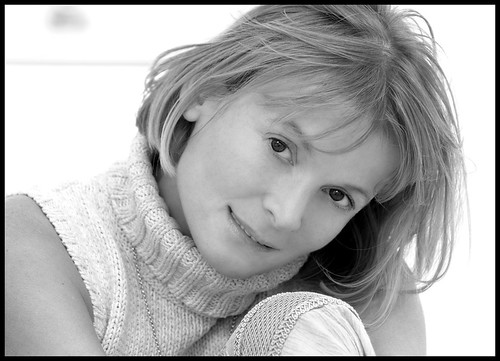
Doreen McNally, Chairperson, Women of the Waterfront


I happen to photograph people through all kinds of ways. For instance, it was my hairdresser, Ian, who told me told me to get in touch with Doreen. Whenever he tells me to do something, I do it, except for the time he suggested purple streaks in my hair. Not old enough for that, or the hat, yet. But give it time.

However, I digress. Ian gave me Doreen's number and I called. She had been expecting me and we arranged to meet at her home in Litherland. One Monday morning, I knocked on the door, it opened and the first thing Doreen did was show me the collapsed ceiling in her kitchen. She gave a heated blow by blow description of her battles with the council, and when this was satisfactorily concluded, I learned of the circumstances that led to her fighting for the dockers' rights.

Doreen presented her case with passion and verve, for both the kitchen and the dockers, and I was with her all the way. The wife of one of 500 dockers unfairly sacked in 1995, she fought their cause for two and a half years, and the outcome was victorious. The implications of her vistory were worldwide for never again will any docker anywhere be sacked without notice or compensation. Having met Doreen I can tell you that no other result would have been possible.

I was very careful not to type-cast Doreen for that would have been too easy. I think she was fed up with this as well. I saw her for what she was: a strong woman who was not going to take any nonsense, but also a woman with great compassion and softness, and yes, also a keen sense of humour. And she likes things “nice”, especially her house, in particular her glassware; her passion is not restricted to politics.

When I came back to do the photos, I shot her in the same clothes, with the same hairstyle, and hoped she would present herself in the same way. I think this is a real portrait of Doreen, and I have enjoyed talking to her enormously. She is tremendously intelligent and perceptive, and along the way we even had a few laughs.

Monday, 2 November 2009

Tony Evans, Sculpturer


It was not until he was in his mid 50s that Tony gave up his day job and went to Art College. His transformation from insurance salesman to extremely talented and increasingly successful sculpturer is nothing short of extraordinary. To look at it is hard to imagine he ever made a living selling life policies and I have to admit I was slightly disappointed to discover this.

His eyes are large and penetrating, somewhat hooded in a sexy way, and he is the kind of person that you are sure you have met before. I passed him at an exhibition in the Liverpool Town Hall and stopped to say hello, then realized I did not know him at all. His work I was already well acquainted with, however, through the excellent and witty photographs taken by Jim Connolly.

Tony’s sculptures are of animals fashioned from hammered copper and bronze, the anatomy dissected to leave you with neither skeleton nor sinew, but an alluring mixture of both. They impart the impression of flight, but Tony does not. He is calm and steady, and incredibly modest, almost as if his success has caught him by surprise.

After I had overcome my embarrassment at thinking I knew him, I asked Tony to sit for me. This was solely because his face bears a striking resemblance to that of Samuel Beckett as portrayed by the acclaimed Jane Bown, a photographer who was my earliest inspiration.

When I first started off I will confess that on the technical side I was somewhat lacking and when it came to flash this was more apparent than anywhere else. Quite frankly flash terrified me, so much so that I called my business “Black and White in Natural Light”. Just to make things clear. So it was to my great delight that I discovered that Jane Bown not only shot exclusively black and white, but also did not carry a flash. I make do with a light bulb if I must, she said. I tried it and it works.

So back to Tony. I wanted to “do” him à la Jane Bown meets Samuel Beckett. I think Tony thought I wanted to “do” him in another way, and so, as a happily married man, he was understandably somewhat cautious. However, I managed to convince him and turned up at his studio based in an old bridewell one sunny afternoon. He was in the midst of fashioning an immense Pegasus for The City of Liverpool, and it dominated the dusty room with its rusty shades of spatula-ed bronze and copper.

There was a little too much light there for my purpose, but I spent about ten minutes moving Tony around in the room’s darkest recesses on the off chance of a lucky murky shot, and then I bid him farewell. Jane Bown was always quick.

The photos were good, but not quite what I had in mind so we met again some months later to repeat the shoot. I asked him to wear a black turtleneck and meet me at Starbucks on Castle Street. Always the gentleman, Tony wore the turtleneck (borrowed) and paid for the coffees (insisted). This time I had taken the precaution of bringing that iconic image of Beckett with me to show him. Tony was impressed with it, and thus prepared, we went down to the depths of St James’s train station.

There, in front of lavatorial yellow Victorian tiles lit hazily by smog encrusted underground lamps, I took him. Of course I would never pretend to equal Jane Bown, but nevertheless, the photo was as craggy and haggard as I had hoped. Like his animals defined by hammered metal, so Tony’s face was chiselled by the light into sinews and shadows. Fitting, I think.

Thursday, 10 September 2009

Phil Hayes, Rock Promoter


My friend Tim Brunsden emailed me about Phil Hayes. “I think you should take his photo”, he wrote, “He is a positive force in Liverpool and good to know”. Intrigued, I googled Mr. Hayes and found out the following;

Phil is the driving force behind The Picket, one of Liverpool’s iconic music venues. In 2004 it was forced to close when its Hardman Street home was sold to developers. Luckily, Phil found a converted warehouse in the up and coming area around Cain’s brewery, trendily called Liverpool Independent Cultural District and it is here that the spirit of the original venue is continuing under his auspicious and dedicated leadership.

Well, enough said about that for now. That could be a PR release. I emailed Phil and we arranged a pre-shoot of sorts during a band rehearsal. Never having met him before, I prefer to cover myself with a “pre-shoot” clause in case I mess up (and mess up I do).

Liverpool’s ICD, as I shall now call it, is basically a motley assortment of bland industrial units, neglected council homes, Victorian quasi-ruins, and the magnificent, now renovated Buddleia Building. In some ways, the streets remind me of the iconic line from Adrian Henri’s Liverpool 8 poem: “now a wasteland murdered by planners not German bombers”.
In between a cacophony of prefabricated structures, the history of Liverpool hangs dankly, in the air, on yellow bricks, crumbling stones, and more than anything, across the streets with names of Brick, Kitchen, Flint - hinting at their erstwhile trades. Cain’s Brewery itself was billowing out smoke that day, pulsing forward into the blue June sky, a sign that all had not passed - yet. The skeleton of a modern and extremely ugly apartment block dominated the skyline. The shape of things to come. Someone told me that its design had actually won an award.

Apart from this, only the weeds appear to be thriving, growing out of broken cast iron drainpipes and cracked lintels, upwards towards the blue. Of The New Pickett we could find not a trace. I called Tim. ‘It is on a corner, somewhere near Greenland Street. He hasn’t got a board up yet”. So we drove around some more. On our final slow crawl around we found the building - shuttered. Phil had forgotten.

He eventually sent me an apology by email, but I was riding the proverbial high horse and so never replied.
Some months passed and I found myself at the opening of “The Beat Goes On” at The Liverpool World Museum. Very interesting too, it was, and quite a number of the people depicted on the wall posters were standing around in the real flesh. Echo and The Bunnymen, The Zutons, that guy from Cream.

It did not go unnoticed by me that many of these same were rather inebriated too. I don’t know what they were on, but surely it was not that luke-warm sparkly stuff I had been offered downstairs in the foyer? In no way am I suggesting that anything untoward was afoot, just that there was another party in (com)motion somewhere that I had not been invited to.

It was as I was bending over a memorabilia case containing Billy Fury’s guitar, that I heard, “To live outside the law, you must be honest”. I beg your pardon? Looking around I came face to face with none other than Phil Hayes. It’s Bob Dylan, he muttered. Never mind Bob Dylan, Phil was rather the worse for wear. How did I recognise him? From Tim’s “Liverpool Story” on him. No mistaking.

You stood me up, I told him, and I was supposed to have taken your photo? Swaying uncertainly, he peered at me, and then said, you were?

Around noon the next day Phil called and apologised for being drunk. I was impressed. We are all entitled to be rat assed from time to time. Also, forgetting an appointment is not the crime of the century. Being on a high horse is not an admirable trait.

Soon after I did the real thing, and by then the exterior wall of The New Pickett boasted a magnificent Irish Mural. It was the perfect background for Phil’s green blue eyes and highly coloured tattoos. Phil and I had a good talk, about life, his love of Shakespeare, and drugs in the music industry. And of course, Bob Dylan.

Saturday, 6 June 2009

Ingrid Spiegl, Publisher


’When she was eighteen, Ingrid was the hottest girl in Liverpool”. So Adrian Henri told Catherine Marcangeli, who, in turn told me. “Every male in town was after her”.

Testament to this is an album cover Ingrid appeared on for The Liverpool Scene, a crowd scene true, but a crowd of all the “it” people at that time, and there in the front, Ingrid with her Cheshire cat grin.

It could be said that she was the original “it” girl, before the Hiltons, and Taras, the Sloane Rangers, and the Preppies. Ingrid was a flower girl, a Liverpudlian born and bred belle of the sixties. Now, she approaches another kind of sixty and age does not diminish her.

A lover of the arts, culture (opera in particular) and people, she is sexy and sparkling, as effervescent as a bubbling spring. Her voice is sweet, almost childlike, but don’t let that deceive you for her brain is tack sharp.

Ingrid is particularly good with words and has a WICKED sense of humour. For 30 odd years, with her late husband Fritz, she ran Scouse Press, specializing in books of local interest, such as the Learn Yerself Scouse series, from the basement of her Victorian mansion.

When the orders came in she would emerge into its depth and work all hours on the archaic printing machines until the deed was done. One day she experienced a particularly speedy route into the nether regions of her house when the living room floor collapsed beneath her and she was beamed right down.

The floor has been repaired since and the traditional printing press sold to a collector. Now the books arrive from China and though Scouse Press is still going strong, Ingrid has more time to enjoy her life on a brighter floor of her eclectic mansion. Knock on the door and warm your hands by her Aga. “Tea or coffee” she might ask? Then she will just as likely flash her violet eyes at you and say, “Oh lets have a bottle of bubbly”! Her mouth will twitch uncontrollably as she attempts to suppress the humour of the thought. There is a large, well-stocked wine cellar to get through after all.

With any luck Ingrid will give you a tour of her home from which much about her can be gleamed. There is the sixties bathtub in her bathroom, replete with a painting by herself, her Tudor oak four poster bed, the guest room where each item tells a story, and each one seems to belong. In another bedroom a mishmash of stuff awaits other destinations, including the colour triptych she has been working on forever, and the fox sitting on a potted plant, which is not really a fox, but bloody well looks like one.

Her sense of humour is everywhere. She has two cats, Toby and Black Jack, aptly named, and they have free reign of the place, even the kitchen counters. They are strong and self-assured and mirror their owner in many ways, only Toby is rather fat and watch out that Black Bastard does not snap at you.

With her background in art, there are many things Ingrid could have put her hand to. That she owns a publishing company is one of those turns of fate. Just when you think you have “got” her, she tosses a whimsical phrase out, and you realise that tea, coffee, what the hell, champagne, is what it is all about.. Or is it?

Friday, 17 April 2009

Levi Tafari, Poet


Levi looked at me with assessing eyes. I could see that he was trying to work out my intentions and it made me nervous. My intentions were not very profound.

Of Jamaican heritage and West African roots, he is a celebrated poet, playwright and musician. His compelling face and background make him an ideal subject to photograph.

On a dark rainy afternoon in November, I knocked on Levi’s door. Amongst all his other accomplishments, he is a trained Cordon Bleu chef and I had a vague motion of a man and his kitchen. This idea was swiftly dispatched when I found out that two others had been there before. The knife and the elaborate dish trick had been executed. I certainly did not want to be derivative.

That day Levi put together a simple meal of moist Jamaican fruit bun, thickly sliced and smeared with butter, and topped by a young cheese. To accompany we had fruit tea. He placed this gracious treat on mats in the dining room on a square glass table and invited me to sit down. I asked Levi which place was his. He is married, with a son and a daughter, and everyone in families has “their” place at the table. I did not want to start things off on the wrong seating.

We talked, circling a mishmash of topics. Often being described as an Urban Griot, I could see why. For starters, he jumped right into politics and the pending displacement of world powers. This was duly followed by food and Liverpool, mixed with various aside stories. The finale was why Levi had a Jamaican accent (of sorts), although he had been born and raised in Toxteth.

His formative years were passed in a large Victorian house owned by an aunt where he only heard foreign accents. A Barbadian family lived on the ground floor, Nigerians above, and Levi and his family on the top floor. When Levi first went to school he was placed in a class for the incomprehensible.

In the two hours I stayed, Levi never ceased to look at me with those questioning eyes. At the end he asked, so what about my kitchen, is it right for the shoot? I paused. It does not say enough about you, I said. He looked disappointed, and retorted, but it is only a kitchen. Exactly, I answered, and added hurriedly, there is not enough natural light anyway.

Thus it was agreed that I would shoot him in my studio, black on black. Just in case this did not happen, I took a few very dark shots of him in the kitchen in front of a metal wall organiser. Then I left and worried all the way down the dock road. Would he cancel?

As soon as I arrived home, I loaded the few photos onto my computer. Underexposed, but very good. Levi has a great face and he is very relaxed in front of the camera. I pressed auto contrast in Photoshop and the images took on new life. If necessary, they would pass muster.

The shoot did happen, and Levi gave generously of his time. He was extremely loquacious and we continued to explore a medley of topics. I had worried what he would think of my home, but I need not have. As a matter of fact he had had the same worries about what I had thought of his after a tactless comments during our first meeting. This is a man who pays close attention to words.

A week later I posted the contact sheets off to Levi. The next afternoon I was driving home after a really upsetting day and my mobile rang. It was Levi; ecstatic, full of heart-felt praise. He just wanted me to know immediately how much he loved the photos. His words flowed down my hands-free like beautiful, warm, soothing honey, sheer poetry and music to the ears. Levi, champion of Liverpool 8, Urban Griot and conscious-raiser, had cheered me up.

Saturday, 4 April 2009

The confession


I confess straight off the mark so that you are under no illusions. Whilst under the influence of fermented grapes I photographed Justina Heslop, here,Image Resourcer for the forthcoming Museum of Liverpool, and she was standing in front of a church alter.

You may wonder, but let it be said that Justina comes in an extremely curvy and alluring package, a cross between Hermione Granger of Harry Potter fame and a St Trinian’s hell raiser.

The first time I met her she was quite tipsy and did an impromptu photo session of five kooky poses for me. One ended up on my website, and from time to time I went back to it and wondered what more a controlled shoot might extract from her.

Enter the fabulous Alma de Cuba on Seel Street, a restaurant housed in a former church, and saved by a prayer, from administration this week. What better setting than this for a somewhat outrageous girl?

We arranged to meet there, Justina in her outfit from our previous encounter, and I carried along a number of light units to supplement the Gothic darkness of Alma’s interior.

When I arrived, Justina was firmly ensconced at the alter with two companions. A pint of wine spritzer, or at least the remnants of one, sat on the table in front of her. Hello, she said, that’s my auntie, and this is my partner Phil.

Suddenly I was nervous for she seemed very serious and not at all like the girl I had met some weeks before. Had there been any wine in the spritzer? I ordered her another and what the hell, a glass of wine for me.

While we were drinking, my assistant for the day, fashion photographer Bruce Smith, was setting up the lighting. He declared it ready to go and we had a mini dispute. I need to talk to Justina, I told him, and he replied, better take the photo now.

Not my style, but I complied. Justina approached as requested and we set about the mission. Quickly I decided to do the whole thing differently, took my camera off the tripod, and got into it. So did Justina. After ten minutes I declared the job done. We relaxed with another spritzer (for her), a beer (for Bruce) and a massive white wine (for me).

That is when Bruce saw the shot. All I saw was an agreeable haze. He grabbed a reflector and squeezed Justina into a corner, by a stain glass window, on top of a cast iron radiator. Luckily it was not on. “I thought this was over!” Justina protested, as I jumped on a table to take “the shot”. “So did I!”, I exclaimed, and soon it was.

Over drinks I asked her questions and we laughed a lot. Having forgotten a notebook, I scribbled tipsily all over my diary in whatever space I could find. How on earth I was going to remember any of this?

Justina was educated at Archbishop Blanche, in Aigburth, where she was a model student who did her homework and did it well. This girl was an A-star student in fishnet stockings who kept her head down; a hell raiser in appearance only.

The package Justina chooses to present is more a reflection of her fascination with Japanese culture and the sexy "Gothic Lolita" look popular with young girls there.

The truth is that Justina is very bright. Her eccentricity is but further proof of this. Who else would study Fine Art and Dance at university? And what about her passion for sword fighting?

She prefers the rapier and the dagger, she informed me, because both are short, like herself. “The point is to distract the male with these, and of course my chest, use what I’ve got…”

Her partner Phil joined us in laughter at the table. They used to live in Yorkshire where, playing Dracula, he earned his daily bread. Every day Justina, the dutiful girlfriend, brought him exactly this in the form of squishy sandwiches that would not disturb his fangs. This Dracula did not draw blood.

We ordered another few drinks. Confessions in the form of witticisms showered thick and fast. And contradictions too. We would like to move to Canada, Phil announced, there is more room there. Yes, added Justina, we live our lives online. It doesn’t matter where you live in the world if you do that. All we need is a bed and a computer screen.

Hail Justina. The sun was nearly over the yardarm for the Gothic model and her ex-vampire. After a very large coffee, I took a taxi home.

Friday, 20 March 2009

What Flower are you and will you be getting yours??


If Lorraine Whittle could be a flower she would be a deep red Peony. Its romantic old-fashioned form, colour and heady scent speak to her like no other.

Lorraine’s personality is equally fragrant and sunny. She is often seen to laugh ear to ear so broadly that I am frightened she will split in two, and then I rather think she is a bright and welcoming sunflower.

Fifteen years ago, I gave birth to a second child. So joyous was this occasion that my husband and I threw caution to the wind and threw the best party we have ever been to. No expense was spared –we hired top caterers, “now” musicians, and of course I wanted the best and freshest flowers. A friend suggested The Dutch Flower Shop and, being of Dutch origin myself, this seemed meant to be.

On the special day, every corner of our house was dressed in informal arrangements of lilies and wild flowers, in shades of white, all so amazingly fresh that a month passed before I had to reluctantly discard the blooms, wash the vases, and return them to the florist.

The pincipal secret to The Dutch Flower Shop’s success is Lorraine herself. A generous, but astute woman, she is a natural publicist and a firm believer in listening to her customers. It is not unknown for her to offer blooms free of charge if the moment suits, and similarly she knows when to get tough. Whatever the occasion, her flowers are always fresh, arriving daily from Holland in the confines of a capricious truck so long that it seems to swallow the row of modest shops, in Woolton Road, behind it.

When I came to photograph Lorraine she was deep inside one of these trucks, talking to the charming Dutch drivers. I climbed aboard and saw shelf upon shelf laden with crisp fresh blooms. Lorraine was selecting the loveliest and most unusual. Have you got any Ranunculus, she asked? (I googled this later and can tell you they look just like peonies). Then, coffee, she asked in the same breath to no one in particular. We all said yes.

The business opened in 1980 when she was heavily pregnant with her first child so Lorraine can honestly say she has not had a Mother’s Day off in twenty-nine years. But her two sons would never dream of buying her flowers. “My son once thought it would be a good laugh to get me a bunch of daffs from another florist. I nearly hit him with them.”

Traditionally this is the busiest time of the year for her, even more so than Valentine’s when it has not been unknown for one man to order romantic bouquets for more than one woman!

But as busy as she is, come evening she kicks off her heels, and loves nothing more than to cook intricate meals for her family while relaxing with a glass or two of wine. There is not one cookery program unfamiliar to Lorraine, no mean achievement considering the plethora of them around. Perhaps it is somewhat ironical then that the oddest request she ever received was for a funeral wreath fashioned to look like a McDonald’s hamburger. It had been the deceased’s favourite dish and perhaps it is best not to ponder this too deeply.

Not least amongst the many notables Lorraine has prepared bouquets for, there is the Queen (three times), Princess Diana and yes, even the Pope. She giggled when telling this, and her staff joined in. And that is the second secret of her success. Chez Lorraine everyone has so much fun. No wonder then that Vogue recently listed The Dutch Flower Shop as Coleen Rooney’s favourite florist.


The Dutch Flower Shop
123 Woolton Road L15 6TB
Telephone 0151 737 1595